Solving is Solved: Why Technical Interviews Still Test the Wrong Variable
The 'solution' is now a commodity. Learn why hiring managers must stop testing code output and start measuring agent orchestration and token efficiency.
The software engineering landscape changed forever on the day LLMs moved from "chatbots" to "agents." If you are a VP of Engineering or a CTO at a Series A-C startup, your team is already living in this future. Your engineers are using Cursor, Claude Code, and Copilot to move at 10x speed.
Yet, when it comes to hiring, most teams are still using a 2015 playbook to solve a 2026 problem. You are likely still evaluating candidates based on their ability to produce a "solution." But here is the uncomfortable truth: The solution is now a commodity.
If a candidate can prompt an LLM to generate a working function, they haven't proven they are a great engineer; they’ve only proven they have an internet connection. To find the top 1% of talent in the age of AI, we have to stop testing for output and start measuring orchestration.
The Calculator Problem: When the 'How' Became Everything
In the 1970s, math teachers panicked about the calculator. They feared students would lose the ability to think. Eventually, the curriculum shifted: we stopped testing long division and started testing the ability to apply calculus to complex problems.
Engineering hiring is currently facing its "Calculator Moment."
In 2022, we hired for the ability to write a complex function from scratch. In 2026, that function is just a prompt away. When you give a candidate a LeetCode-style challenge in a browser-based IDE, you aren't testing their engineering rigor. You are testing who can copy-paste into a sidebar faster.
The result? A massive signal-to-noise gap. You see a "Pass" on a technical screen, but three months later, you realize the new hire can’t navigate a complex codebase or manage their own AI overhead.
The shift from 'Doer' to 'Orchestrator' is the defining change of this decade. Your next senior hire needs to be a director of agents—someone who understands system design, edge cases, and architectural integrity—rather than someone who simply grinds out syntax. If your interview rubric still awards points for "correct output" without looking at the path taken to get there, you are hiring blind.
The Hidden Signal in the Terminal
The industry has tried to adapt by adding "AI Sidebars" to traditional interview platforms. But these browser-based sandboxes are artificial environments. They hide the candidate's real habits.
True signal doesn’t live in the final Pull Request. It lives in the "Agentic Loop":
- How many turns does it take for a candidate to reach a fix?
- Do they blindly accept a hallucinated suggestion, or do they catch it in the CLI?
- How do they navigate the file structure when the agent makes a mistake?
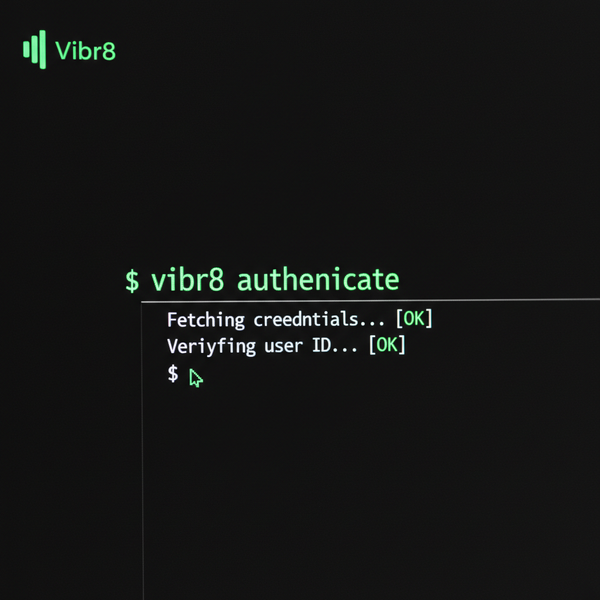
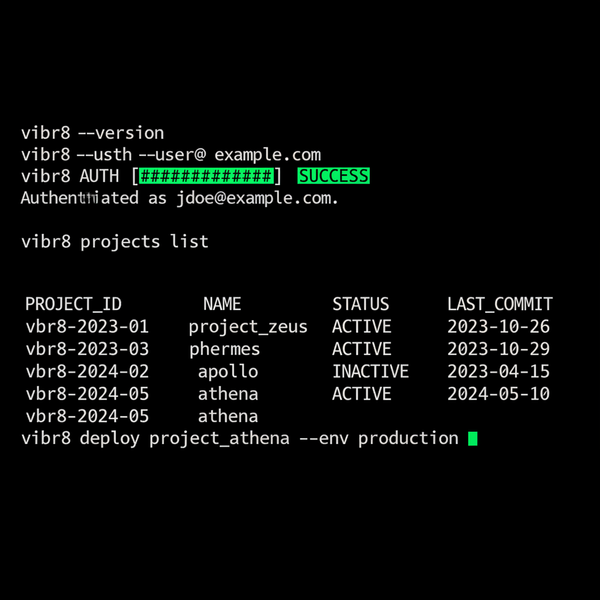
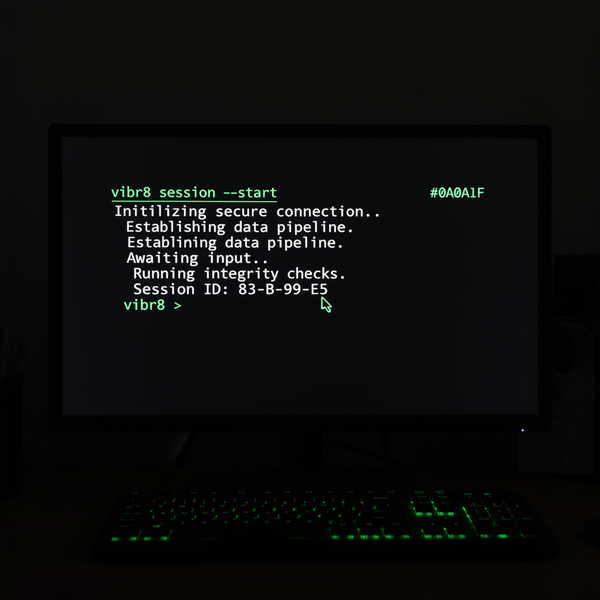
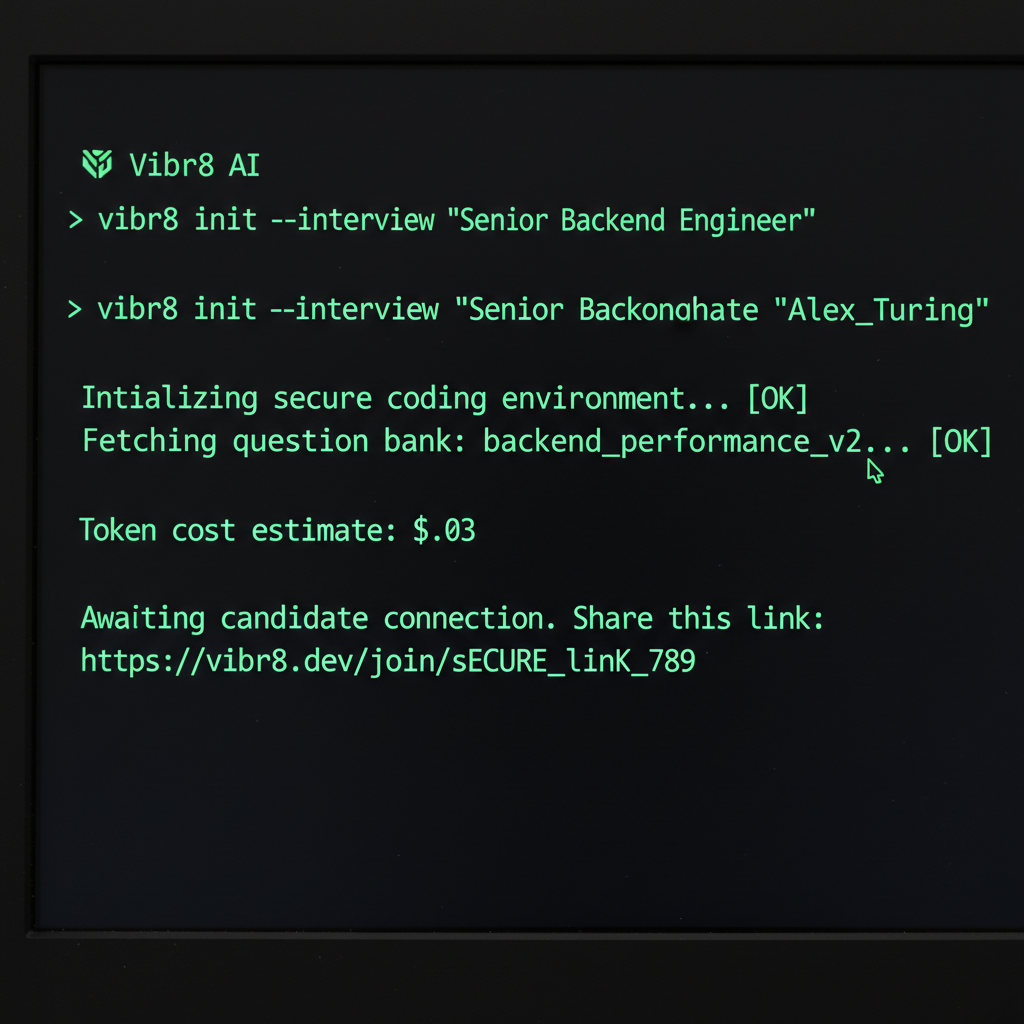
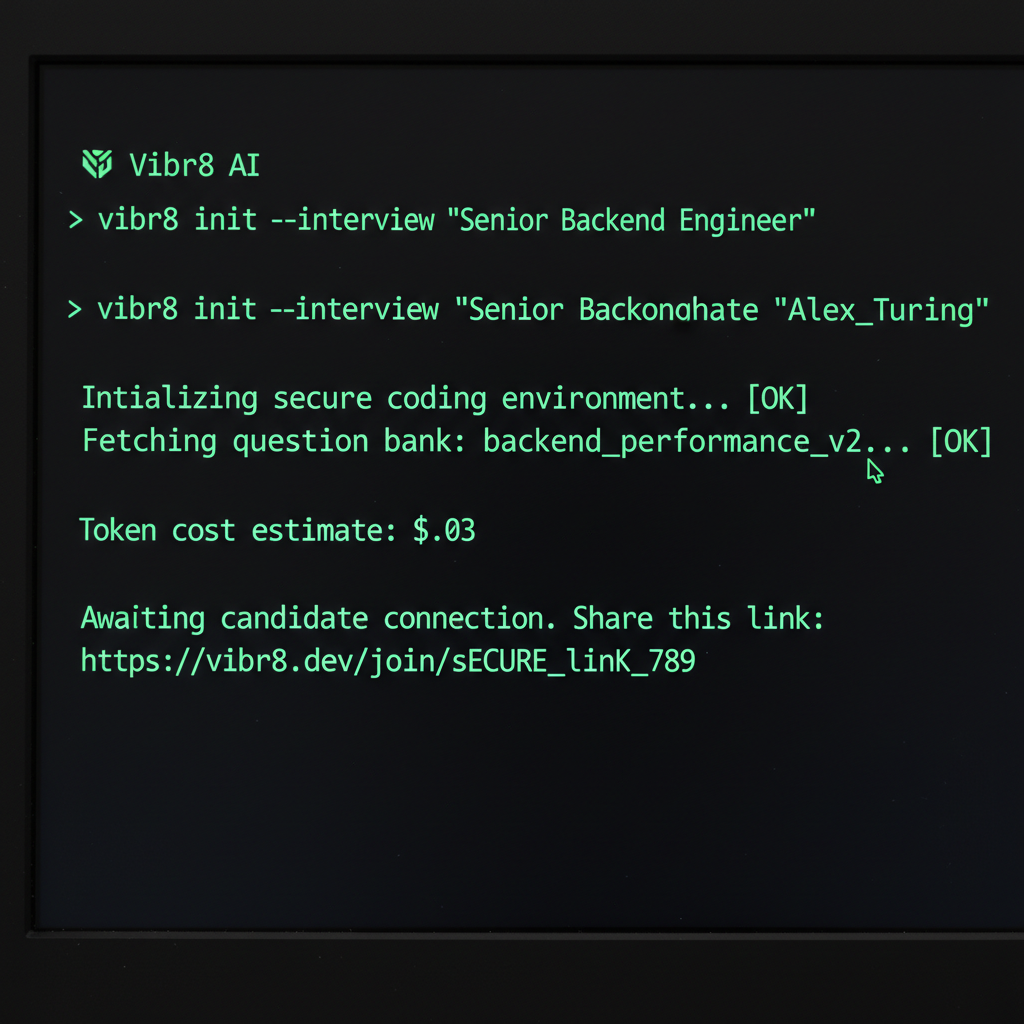
This is why we built Vibr8. We believe the terminal is the only place where true engineering mastery is revealed. By having candidates run brew install vibr8 and work on real GitHub issues in their local environment, the signal becomes pure.
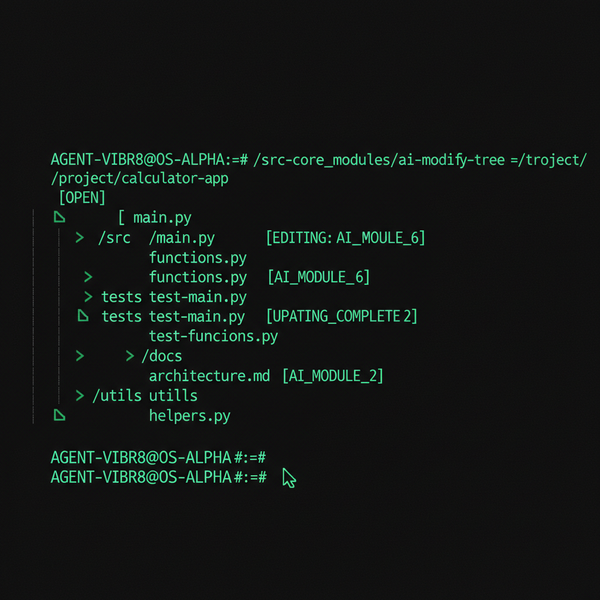
When a candidate is in their own IDE, using their own shortcuts, and interacting with an agent via the CLI, you see their actual workflow. You see the file-touch patterns. You see the iterative prompts. You see whether they are driving the agent or if the agent is driving them. Mastery in 2026 isn't about knowing the syntax; it's about the precision of the orchestration.
The Anthropic Bill: Your Newest Hiring Metric
There is a new line item on your P&L that didn't exist two years ago: AI compute costs.
As your team moves toward an agentic workflow, every engineer you hire comes with a recurring API overhead. For the first time in history, the way an engineer thinks has a direct, measurable cost in tokens.
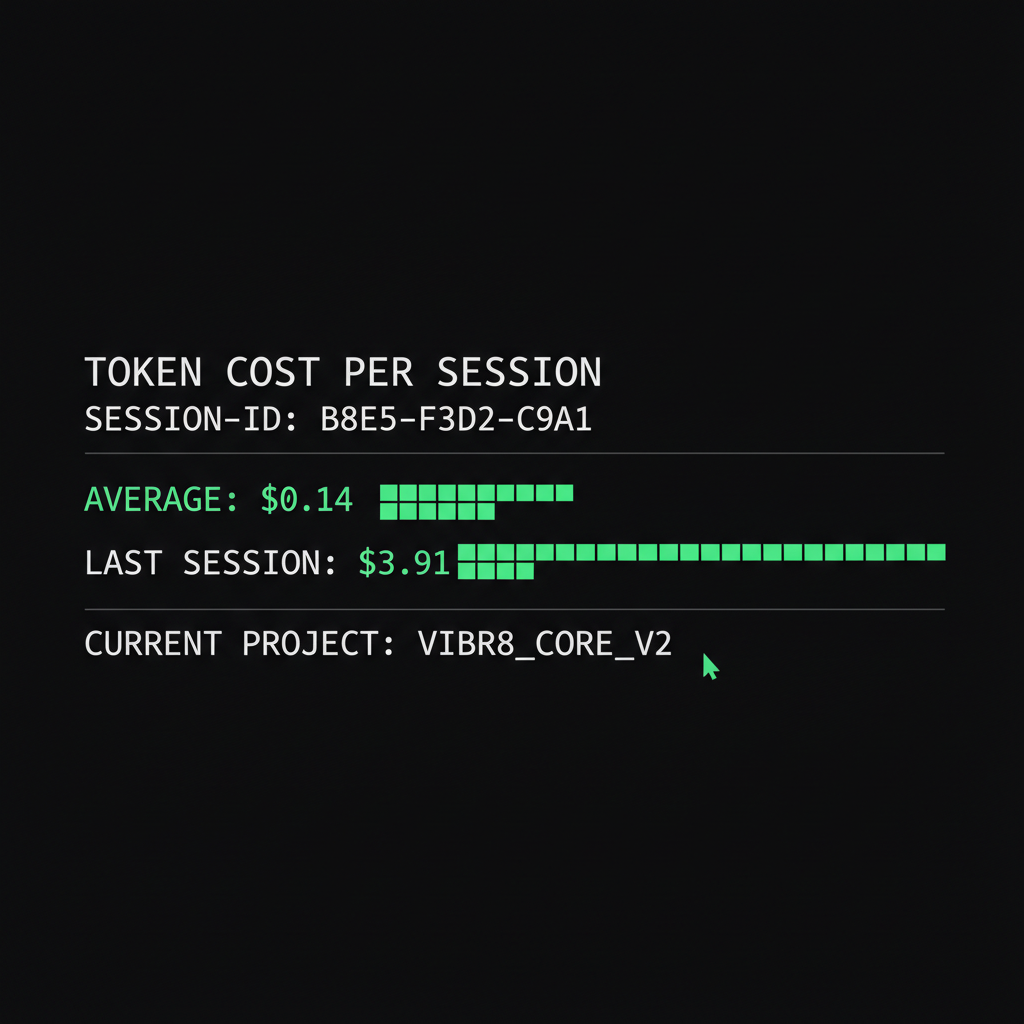
At Vibr8, we’ve introduced the 'Token Burn' metric. In our pilot sessions, we’ve seen two candidates solve the same GitHub issue with vastly different efficiencies.
- Candidate A (The Senior Orchestrator) uses surgical prompts, provides the agent with the right context, and reaches a solution for $0.45 in Anthropic tokens.
- Candidate B (The Junior Spammer) repeatedly asks the agent to "fix the error," generates thousands of lines of unnecessary code, and reaches the same solution for $7.12.
If you hire five "Candidate Bs," your monthly Claude bill will skyrocket before they’ve even finished onboarding.
Efficiency is the new proxy for seniority. High-signal candidates understand token context windows; they know when to pull in a file and when to prune the conversation. Vibr8 provides exact passthrough billing for every interview session, giving you a literal dollar figure for the candidate's efficiency. You shouldn't wait until the end of the quarter to realize your new hire is an expensive prompt-spammer.
Beyond the Sidebar: Why 'AI-Enabled' Isn't Enough
If you’re using CoderPad, HackerRank, or CodeSignal, you’ve likely seen their new "AI features." Usually, it’s a chat window tacked onto the side of a web-based code editor.
This approach is fundamentally flawed because it treats AI as a "cheat code" or an assistant rather than the core interface. In a modern workflow, the agent is the interface.
The legacy platforms are measuring the wrong side of the equation. They are still trying to protect the "sanctity" of the code output. Vibr8 flips this. We don't just "allow" AI; we provide the agent, we pay for the tokens, and we record every single interaction between the human and the machine.
We aren't interested in whether they solved the puzzle. We are interested in:
- Prompt Intent: Did they ask the right questions?
- Context Management: Did they feed the agent the right files?
- Verification: Did they run the right tests in the CLI to verify the agent's work?
The First Session Challenge
You might think your current hiring process is "AI-forward" because you let candidates use ChatGPT during the interview. But until you see the telemetry of their agent interactions and the cost of their token usage, you are missing 90% of the data.
We are currently inviting VPs of Engineering and CTOs at AI-forward startups to join our Free Pilot Program.
The offer is simple:
- No platform fees.
- We cover the AI costs.
- One real candidate.
- One real GitHub issue.
- One comprehensive report that shows you the true DNA of your candidate’s workflow.
Stop testing for the solution. The solution is solved. Start testing for the orchestration.
Ready to see the data you've been missing? Install the Vibr8 CLI and run your first pilot today.
Conclusion
The "Senior Software Engineer" of 2026 looks nothing like the one from 2020. They are part architect, part debugger, and part agent-conductor. If your interview process hasn't evolved to measure those specific skills, you are hiring for a world that no longer exists.
Vibr8 gives you the tools to see through the noise of AI-generated code and find the engineers who can actually lead your team into the agentic future. It’s time to move out of the browser and back into the terminal.