The $4.22 Signal: Why You’re Still Interviewing for the Wrong Century
Stop testing if candidates can solve problems. The agent does that now. Learn why token efficiency and agent orchestration are the new hiring signals.
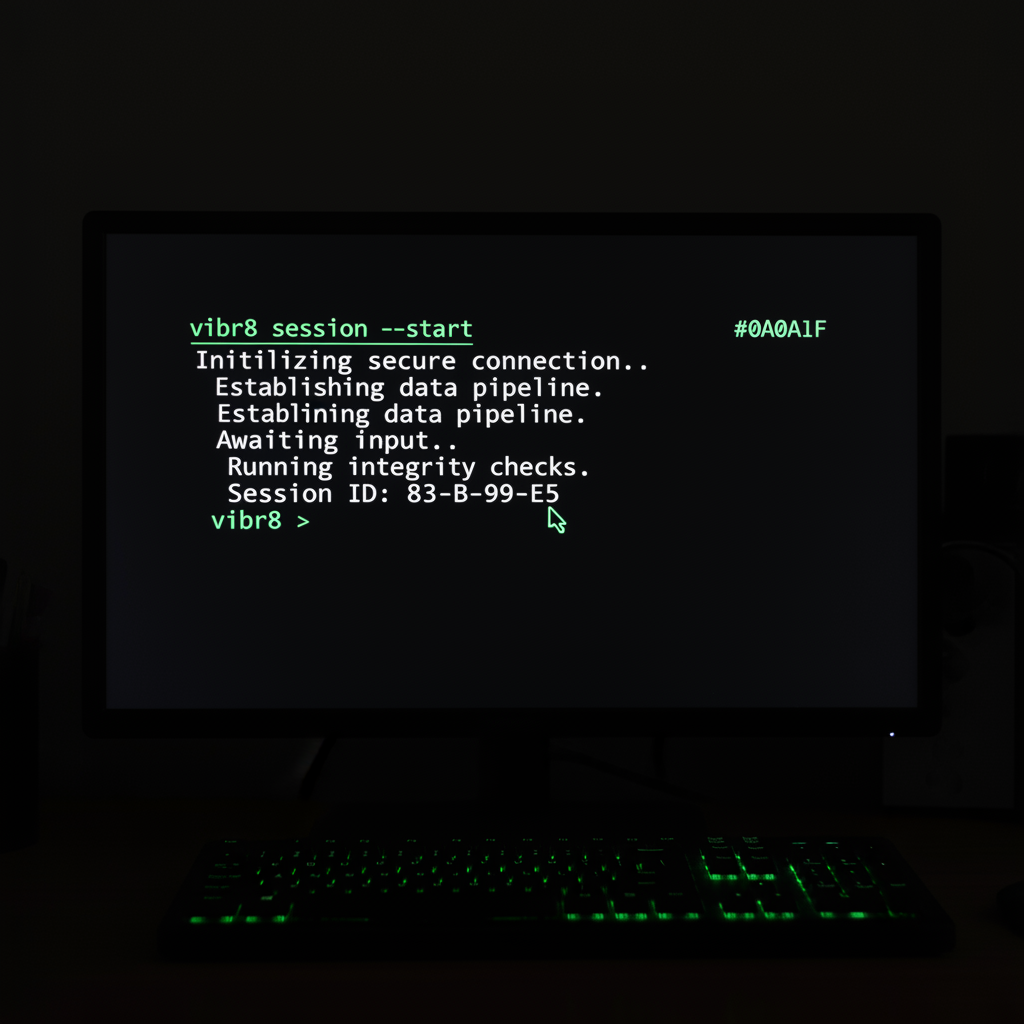
The engineering world changed in 2023, but your interview process is still stuck in 2019.
If you’re a VP of Engineering or a CTO at a Series B startup, you’ve likely already integrated AI into your workflow. Your team is using Cursor, your PRs are being summarized by LLMs, and you’ve probably even allowed candidates to use AI during technical interviews. You think you’re being progressive. In reality, you’re likely just subsidizing a candidate’s ability to copy-paste.
The problem is that most technical interviews still treat the solution as the primary signal. But in a world of agentic workflows, the solution has become a commodity. If a candidate can solve your "hard" architecture challenge in fifteen minutes using Claude 3.5 Sonnet, you haven’t measured their seniority—you’ve just measured their internet connection speed.
At Vibr8, we believe the industry is looking at the wrong data points. It’s time to stop measuring the code and start measuring the orchestration.
The Solution is Now a Commodity
The uncomfortable truth is this: your current technical interview is a test of how well a candidate can mimic a Large Language Model.
For decades, we used LeetCode and system design whiteboarding to proxy for "intelligence" and "problem-solving." But today, LLMs are world-class at solving isolated, well-defined problems. When you give a candidate a sandbox environment in a browser and ask them to fix a bug, the "hard" part of the job—the syntax, the boilerplate, the algorithmic optimization—is handled by the agent.
If the candidate can solve the problem with a single prompt, what have you actually learned? You’ve learned that they have a subscription to a top-tier model. You haven't measured their skill; you’ve measured their toolset.
The shift from "How do I solve this?" to "How do I direct the solution?" is the biggest change in engineering since the invention of the compiler. Yet, legacy platforms like CoderPad, HackerRank, and CodeSignal are still selling you "calculator tests" in an era of programmable math. They’ve added an AI sidebar as a feature, but they haven't changed the underlying philosophy of the test. They are still looking for a "Pass" or "Fail" based on whether the tests turn green.
The journey is now the only thing left worth measuring. The signal isn't in the final git commit; it’s in the telemetry of how they got there.
The CLI is the Only Honest Environment
Most interview platforms live in the browser. While convenient, browser-based IDEs are "sandboxed theater." They mask true engineering behavior by forcing candidates into an artificial environment that lacks their local configs, their aliases, and their natural muscle memory.
Vibr8 operates on a different philosophy: Terminal-native or nothing.
When you invite a candidate to a Vibr8 session, they don't open a URL. They run brew install vibr8. They authenticate, select an assigned GitHub issue challenge, and work exactly how they earn their salary: in their own terminal, using their own IDE (Cursor, VS Code, Vim), and interacting with our CLI-first agent.
This isn't just about "vibes"—it’s about the purity of the signal. By moving the interview to the candidate's local machine while piping the telemetry back to our platform, we capture:
- Every single prompt sent to the agent.
- Every file touched or read.
- Every agent loop and execution attempt.
- The "invisible" habits of high performers—like those who verify assumptions with small scripts before committing to a large AI-generated block of code.
Terminal-native interviews reveal the red flags of the "prompt-and-pray" crowd—candidates who blindly execute whatever the agent suggests without reading the diff. In a browser sandbox, that behavior is hard to spot. In the CLI, it’s glaringly obvious.
Your Next Hire’s Anthropic Bill
Here is something most CTOs aren't tracking yet: Every engineer is now a cost center for compute.
As you scale your team, your Anthropic or OpenAI bill is going to become a significant line item. We are seeing a massive variance in how engineers use AI. Candidate A might solve a complex refactor by providing precise context, resulting in a $0.42 token cost. Candidate B might solve the same problem by repeatedly dumping the entire codebase into the prompt window and running recursive loops, racking up $4.50 in costs for the same result.
In a production environment, Candidate B isn't just less efficient; they are an infrastructure liability.
Vibr8 introduces the Token Efficiency metric. Because we run the session on our own API tokens, we provide exact passthrough billing data. We show you the literal dollar figure of a technical session before you sign the offer letter.
This data allows you to identify "Agent Hallucination Management." How does the candidate react when the AI leads them into a rabbit hole? Do they recognize the hallucination early and pivot, or do they keep burning tokens (and time) trying to force a broken solution? By measuring this, you can predict long-term API costs and engineering velocity based on real behavioral data.
Beyond the Rubric: Measuring Orchestration
Hiring in 2025 requires moving beyond binary pass/fail rubrics. To build a high-performing AI-forward team, you need to measure three new pillars of technical excellence:
- Prompt Precision: Can the candidate articulate technical constraints to an agent, or do they rely on the agent to "guess" the intent?
- Context Management: Do they understand which files and documentation are relevant to the task, or are they overwhelming the context window with noise?
- Verification Speed: How quickly do they move from "agent output" to "working code"? Do they have a robust mental model for testing and validation?
The IDE is gathering dust; the agent is the interface now. If your hiring process doesn't reflect that, you aren't hiring for the future—you're hiring for a version of the industry that no longer exists.
Stop Interviewing for the Wrong Century
The gap between how we work and how we interview is widening every day. You can continue using legacy platforms that measure 2010-era skills, or you can start capturing the data that actually matters for your 2025 roadmap.
We want to show you the difference. We are currently offering a free pilot for engineering leaders at AI-forward companies.
- One real candidate.
- One real-world GitHub issue challenge.
- One comprehensive report including behavioral analysis, token cost, and orchestration telemetry.
We’ll even cover the AI costs for the session. No platform fees, no procurement hurdles—just better data.
Don't wait for your monthly Anthropic bill to tell you that you hired the wrong person. See the signal before you sign the offer.
href="https://vibr8.ai">Get Started with the Vibr8 Pilot